
Engineering for Emerging Commerce: Why We Built KhataIN from the Ground Up
Spreadsheets break down when VAT rules, party credit balances, and intermittent connectivity collide. Here is why we architected KhataIN around the real daily rhythms of Nepali business.
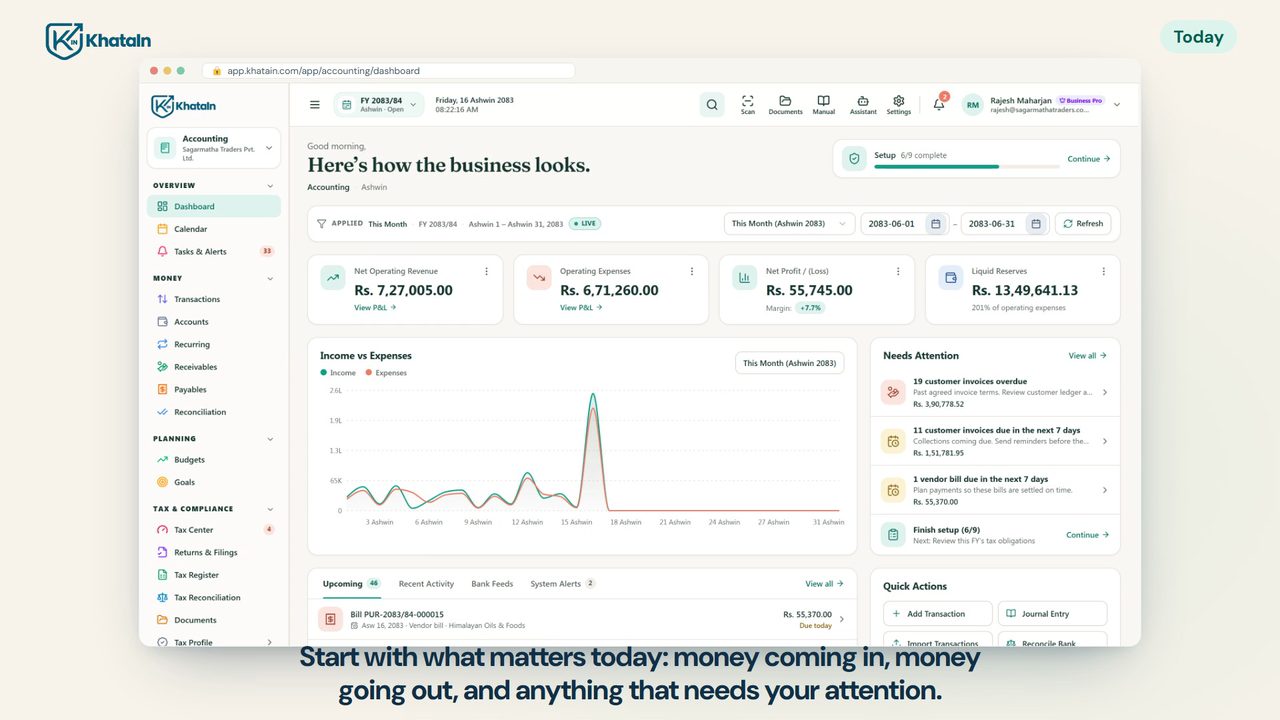
Most small to mid-sized businesses in emerging markets do not fail because they lack ambition or customers. They struggle because their operational data lives in fragmented places: an old spiral notebook for customer credit, a desktop spreadsheet for inventory, and a manual invoice booklet for tax officers. When these systems fail to talk, cash leaks silently.
The False Promise of Generic Global SaaS
Global accounting software often assumes continuous high-speed internet, single-currency ledgers, and standard Western invoicing habits. In Nepal, businesses operate under distinct realities: VAT/PAN compliance requirements, dual party credit relationships (where a vendor is also a buyer), and payment rails like eSewa, Khalti, and ConnectIPS.
When we designed KhataIN, our goal was not to clone existing ERPs. We set out to create software that feels immediately familiar to an entrepreneur while carrying the computational power of a modern cloud platform.
Offline-Resilient Architecture
Point of sale (POS) and billing cannot stop because a fiber connection dropped for five minutes. We engineered KhataIN’s counter checkouts and transaction logging with optimistic local state and synchronized reconciliations.
Every transaction is queued locally, assigned a deterministic cryptographic state, and synced the moment the connection restores without duplicate entries.
// Deterministic reconciliation queue for local POS offline sync
interface SyncTransaction {
  id: string;
  ledgerId: string;
  amount: number;
  idempotencyKey: string;
  timestamp: number;
  synced: boolean;
}
Turning Ledgers into Working Intelligence
A ledger shouldn’t merely be a record of the past; it should actively protect the future. With KhataIN’s cash flow insights, business owners can see their upcoming debt EMI commitments and receive automated alerts before inventory falls below critical threshold levels.
“Useful software doesn’t force people to change how they think; it elevates how they already work.”
The takeaway
As Nepali commerce continues its rapid digitization, having grounded, reliable tools is foundational. KhataIN is our commitment to giving businesses the clarity they deserve.
More to think about.
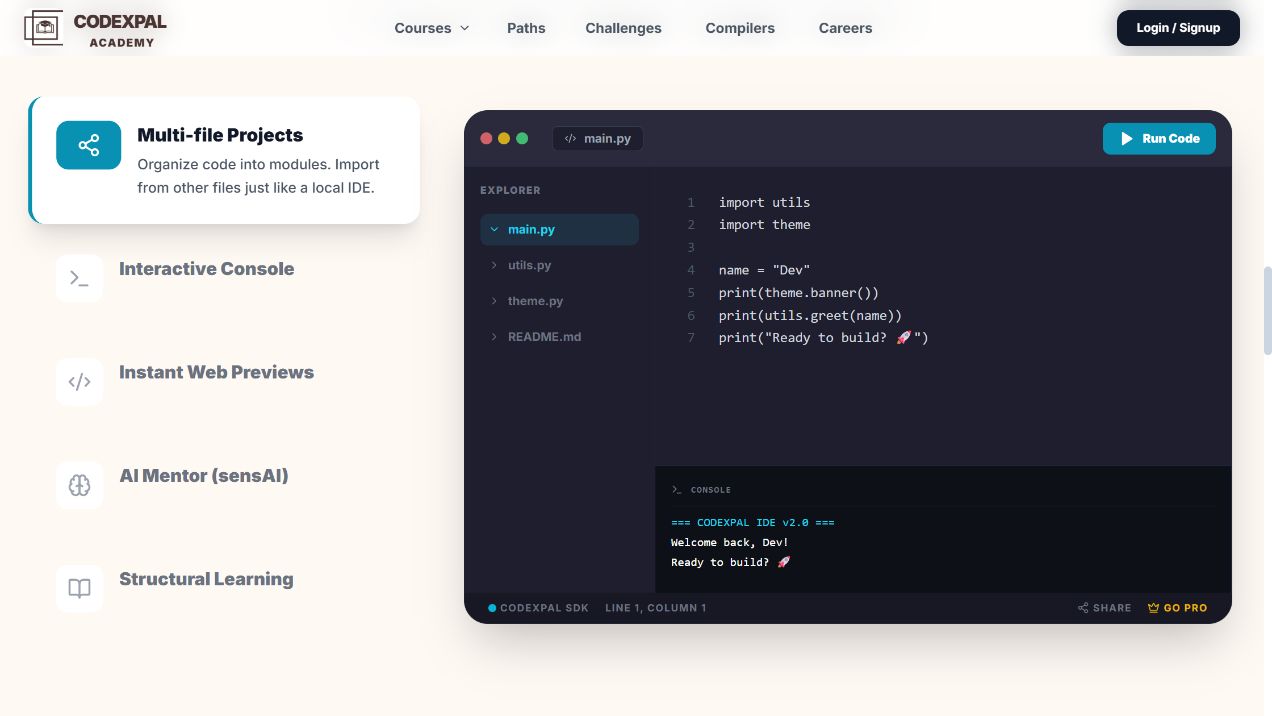
Beyond the Resume: Evaluating True Developer Competence with AI
Resumes describe history; coding challenges test rote memorization. How Codexpal Learn calibrates real problem-solving, architectural judgment, and verified skill signals.

Why We Build With Plain Language (and Avoid Tech Theater)
Modern tech websites love buzzwords. At Codexpal, we believe that serious engineering is clearest when explained in plain human language.