
Design a secure payment reconciliation workflow
Separate orders, payment attempts and bank settlements so duplicate returns, delayed results and refunds remain explainable.
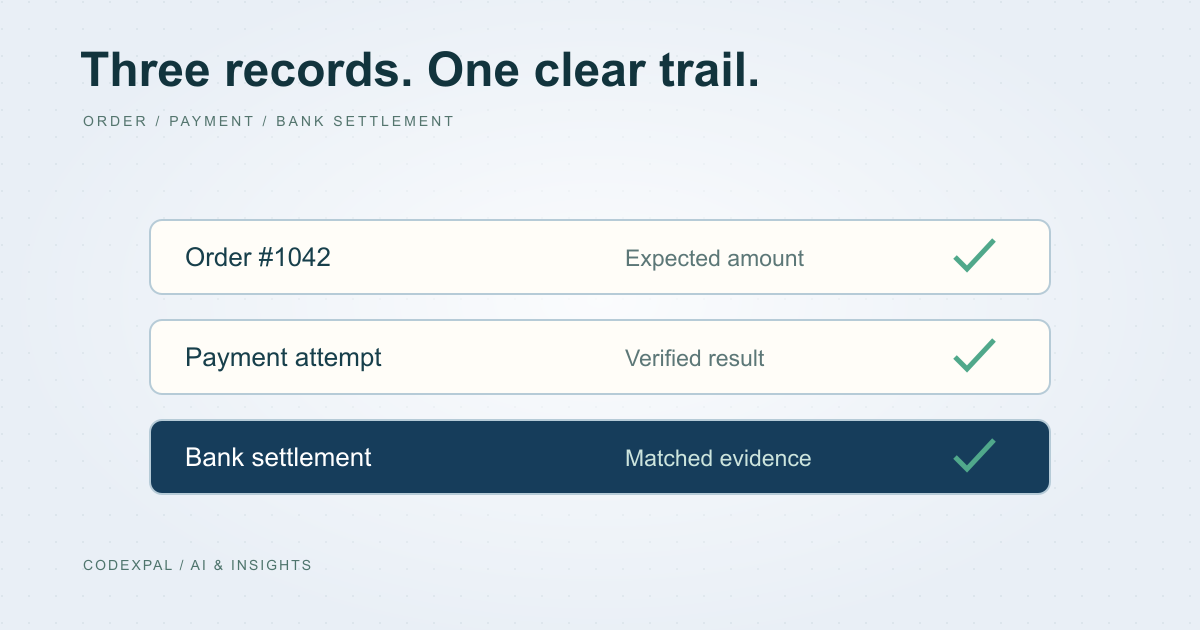
A customer’s order, a provider’s payment attempt and a bank settlement are related records, but they are not the same event. Model them separately. A reliable reconciliation process explains both the expected outcome and the exceptions without erasing the original evidence.
Keep the identifiers separate
Give the order its own identity and each payment attempt another. Store the provider reference alongside the attempt rather than replacing your order number with it. A retried checkout can create another attempt against the same order.
Define the money unit and expected amount before contacting the provider. Where a provider uses a smaller unit such as paisa, keep the conversion explicit. Avoid floating-point arithmetic for stored monetary amounts; choose an exact representation suitable for your system.
| Record | Evidence to retain |
|---|---|
| Order | Expected amount, currency/unit and fulfilment state |
| Payment attempt | Provider reference, verified amount, status and timestamps |
| Settlement | Payout reference, bank entry and applicable fee/refund records |
Make one fulfilment decision
Treat a browser return as input to verification, not proof of payment. Match the provider’s authoritative result to the stored order, attempt and merchant context. Keep unknown states pending or under review rather than mapping every non-error response to paid.
Use an atomic state change and a database uniqueness rule for the fulfilment event. Replaying the same verified result should leave the order in the same correct state, without shipping again or creating another credit. This is a design requirement to test, not a claim that a diagram makes the implementation safe.
Reconcile the bank movement later
Compare payment evidence with provider reports and bank entries. Preserve the gross payment, applicable fees, refunds and net settlement separately. Do not force a payout that covers several orders into one order’s payment amount.
Maintain an exception queue with an owner and a reason: missing bank reference, amount mismatch, reversed transaction or unmatched refund. Keep investigation notes and corrections as additional records.
A reviewable payment trail
- 01OrderWhat the customer owes
- 02VerifyWhat the provider confirms
- 03SettleWhat reaches the bank
- 04ReviewWhat remains unmatched
Test the difficult cases
Include duplicate callbacks, a return before a lookup completes, delayed settlement, wrong amounts, partial refunds and a provider timeout. Check that each case preserves evidence and avoids duplicate fulfilment.
Build a provider adapter from the documentation approved for your account. The Nepal gateway guide links the current primary starting points and explains why notification formats and settlement terms should not be generalised.
The takeaway
Keep each event identifiable, verification authoritative and corrections auditable. Reconciliation should help someone explain a difference, not merely make two totals look equal.
More to think about.
Plan an eSewa web checkout before writing the integration
Understand the documented ePay return and verification flow, then prepare an account-specific implementation and test plan.
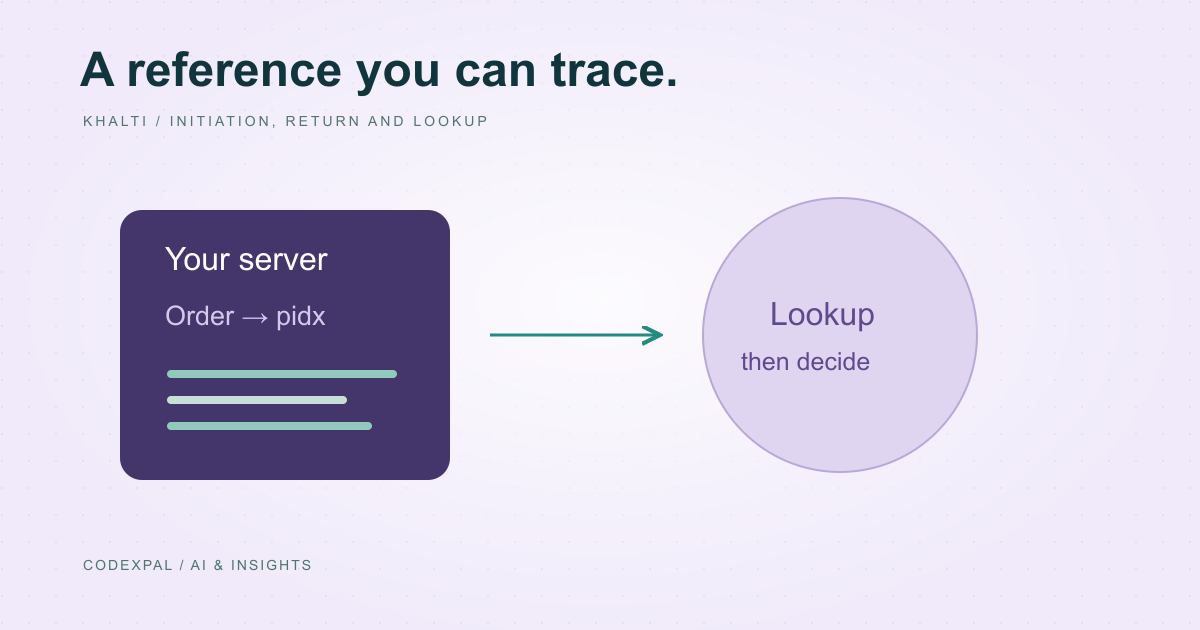
Plan a Khalti checkout: initiation, return and lookup
Prepare the server-side boundaries and failure tests for KPG-2 without mistaking a browser return for final payment evidence.